Stories featuring goblin
About goblin
Appearance
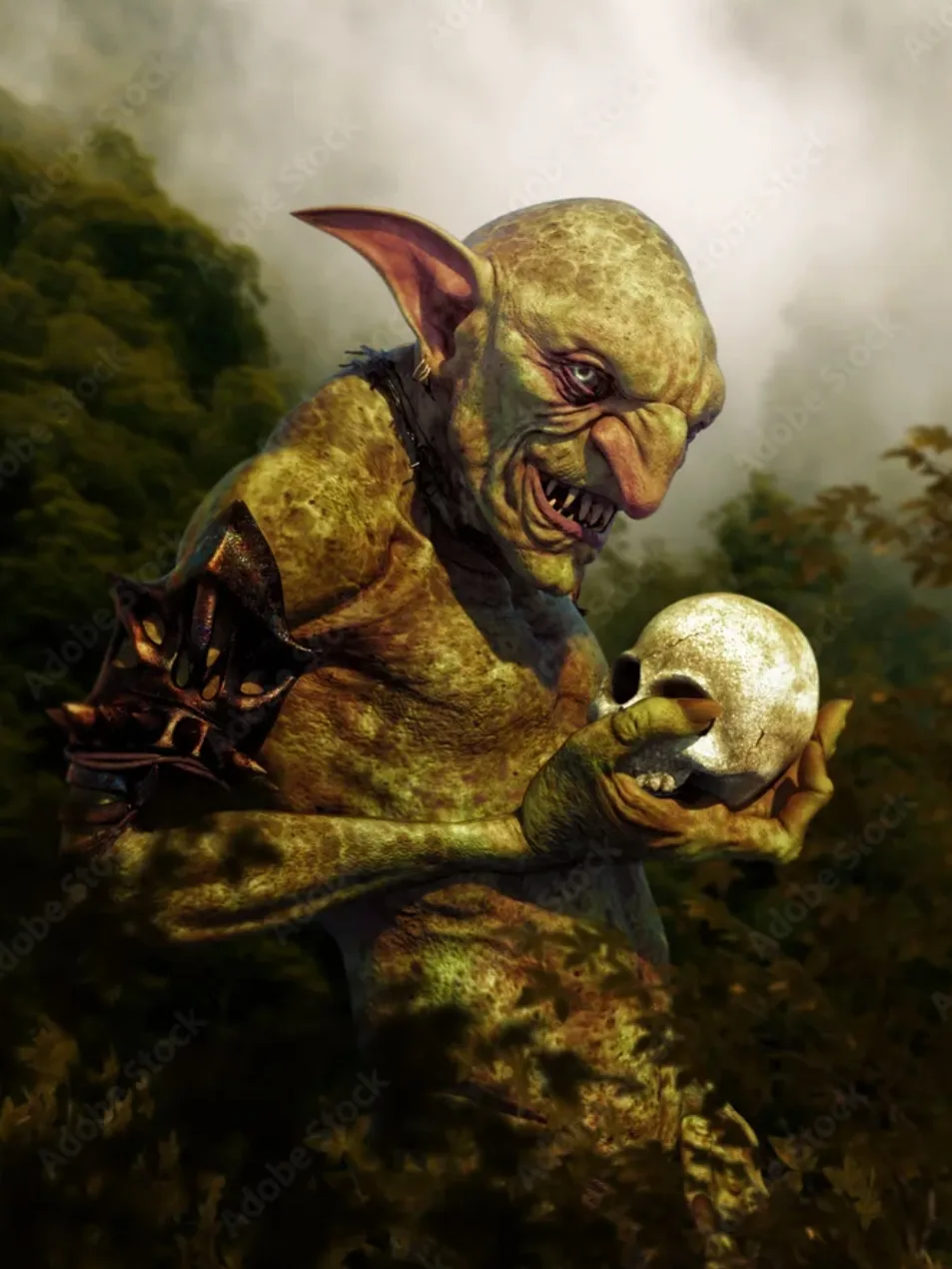
ugly, green, yellow eyes, long ears, long nose
Character Background
A Goblin is a type of fairy originally from European folklore.[1] The word "goblin" is originally derived from the Greek word "Kobalos," which translates into English as "Rogue[2]" or "Evil Spirit.[3]" The word goblin has traditionally been reserved for any ugly fairy that is either mischievous or malevolent.[4] Because of this, the term goblin has been used to describe a wide variety of creatures found in a multitude of traditions throughout Europe. The term goblin can be quite nebulous; and in some cases it can be unclear if a creature would be better described as a goblin, a fairy, or an elf.
After the publication of J. R. R. Tolkien's The Hobbit in 1937 and The Lord of the Rings trilogy between 1954 and 1955, the view of goblins in modern Western fantasy began to change. Goblins were now commonly seen as their own distinct race of humanoid creatures. Typical features of goblins in modern fantasy includes a shorter-than-human stature, either a flat or long and hooked nose, bat-like ears, and either a mischievous or malevolent demeanor.
Somewhat paradoxically, in the study of folklore the term goblin has at times been expanded to include a variety of creatures from non-Western traditions that are seen to be "goblin-like" by Western scholars.
Goblins in Fairy Tales and Folklore
The Benevolent Goblin:
Default
Manuscript page from the Gesta Romanorum from the Médiathèque Valais (Media Library) in Sion, Switzerland.
The Benevolent Goblin is a folk story written by an unknown author that was compiled in the British Gesta Romanorum between the 13th and 14th centuries.[5][6]
Plot:
In a wooded hill in England there once had lived an unusually friendly, helpful goblin. This goblin wore a red robe, and he would help the local knights by offering a mysterious drinking horn that was encrusted with gold and jewels. When the knights drank the unknown liquid from the mysterious horn they would become miraculously cooled and refreshed.
The goblin continued to help the knights, until one day a greedy and deceptive knight ran off with the drinking horn after he asked the goblin if he could drink from it.
The knight was soon captured by the local authorities after he was found bragging about his misdeed, and was imprisoned. The goblin's drinking horn was then given as a gift to the King of England. From that day fourth the goblin was never seen or heard from again.
The Goblin Pony:
57 6b93aecd-a5f9-4e60-b218-b05fa656a505 1024x1024@2x
The Grey Fairy Book by Andrew Lang 1900
The Goblin Pony is a traditional French tale that was transcribed and published in 1900 by the Scottish poet Andrew Lang in his collection of short stories, The Grey Fairy Book.
Plot:
I008
Artwork for the short story The Goblin Pony from The Grey Fairy Book by Andrew Lang (1900)
The short story begins with a grandmother warning her three grandsons not to go out that night because it was Halloween and violently windy. She claimed that this meant that both Witches and their minions, goblins, were out on the prowl. The goblins were said to go out in various disguises in order to harm people.
The three boys ignore their grandmother's plea and go out to pick thyme and blackberries. They then come upon a small, black pony that's said to be "bewitched." This pony is implied by their grandmother's warning earlier in the story and by the title of the story to be a goblin in disguise.
The three boys decided to ride the pony all at once, and they thoroughly enjoyed themselves. They soon found another group of children and invited them to ride with them as well. The pony seemed to be unaffected by the amount of children, so the entire group rode along on it's back. This fun eventually turned into horror when the pony began to run toward the ocean. The children were unable to stop the horse or change its trajectory. The pony ran into the ocean waves while neighing happily as the children drowned. Early in the morning the grandmother decided to look for her grandchildren because the was worried. While looking she encountered the goblin pony, which galloped quickly past her.[8]
This story of children riding a horse to a watery death is very similar to Scottish tales of the Kelpie.
The Goblins Turned to Stone:
1st-ed-1918-dutch-fairy-tales-young
1st edition of Dutch Fairy Tales for Young Folks (1918) by William Elliott Griffis.
The Goblins Turned to Stone is a traditional Dutch short story published in 1918 by the American author William Elliot Griffis in his collection of stories called Dutch Fairy Tales for Young Folks.
Plot:
Goblinturnedtostone
Artwork from Dutch Fairy Tales for Young Folks by William Elliot Griffis depicting a scene from The Goblins Turned to Stone.
The Goblins Turned to Stone begins by explaining the importance of cheese in the traditional dutch diets and it's various uses. It then goes on to explain that the early Dutch were not aware that eating too much cheese caused nightmares, so over time stories of goblins developed in order to explain the nightmares.These goblins are normally invisible to the human eye due to the magical red caps they wear, which make them invisible. During the day they live underground because the sunlight will turn them to stone.
Following this explanation, the story begins with an old woman from the province of Drenthe laying in bed. Just before the old woman falls asleep, she spots a goblin waiting to give her a nightmare at the foot of her bed. She yells to the goblin that she "belongs to the Lord," and called out for daughter Alida. The old woman throw her clogs at the goblin as it tries to escape through a crack in the building. The goblin escapes, but not before Alida manages to grab the red cap from the goblin's head as well as stab the goblin's cloven foot with a needle. The sight of the red cap in her hands gave Alida an idea. This idea could rid the province of the goblins once and for all. Alida left a note for the goblin near the crack where he had escaped. The letter stated that if he ever wanted his cap back, he'd have to bring several hundred of his fellow goblins to the great moor the following night. There they would have a trade. His cap would be found dangling in a bush, but he must leave a gold necklace in the cap's place when he takes it.
The following evening was a moonlit night. Alida gathered all the men in Drenthe and hid in the bushes waiting for the goblins. When the goblin appeared to retrieve his cap the men all ran out grabbing the air at about waist height. One by one the men pulled off the caps of the goblins, turning them visible. The goblins ran every which-way, but the men could tell where a group of goblins was from the one or two who were missing their caps. This continued on the entire night until the sun began to rise. Even though the men only managed to remove the caps from a fraction of the goblins, even the ones who still had their caps were afraid of reporting the event to their goblin ruler. Fearing their ruler's wrath, the decided not to escape when the sun rose, and all the goblins turned to stone.
Dungeons and Dragons Monster Manual (3rd Edition) (2000):
TypicalGoblin
Depiction of a goblin from the Dungeons and Dragons 3rd Edition Monster Manual.
The descriptions of goblins in the 3rd edition of Dungeons and Dragons is strongly based off of the Advanced Dungeons and Dragons (2nd Edition) description, with some paragraphs being almost word-for-word. Even so, there are some added details of note:
The 3rd edition Monster Manual adds that goblins are "bullied" by larger creatures:
"Being bullied by larger, stronger, creatures has taught goblins to exploit what few advantages they have: Sheer numbers and malicious ingenuity. The concept of a fair fight is meaningless in their society."
The manual also goes into more detail about exactly how goblins steal their possessions from others:
"Goblins survive by raiding and stealing (preferably from those who cannot defend themselves easily), sneaking into lairs, villages, and even towns by night to take what they can. They are not above waylaying travelers on the road or in forests and stripping them of all their possessions, up to and including the clothes on their backs."
"Goblins often settle near civilized areas to raid for food, livestock, tools, weapons, and supplies."
Hobgoblins and bugbears are said to travel amongst goblins:
"Hobgoblins and bugbears are sometimes found in the company of goblin tribes, usually as bullying leaders. Some goblin tribes form alliances with wargs, which carry them into combat."
Lastly, the goblins are even said to have a pantheon of dieties:
"The chief goblin deity is Maglubiyet, who urges his worshipers to expand their numbers and overwhelm their competitors."
goblin Visual References
Full body reference: goblin — default
Expression reference: goblin — expression1
Expression reference: goblin — expression2
Expression reference: goblin — expression3

 gorrlock